Google Analytics Tracking Code

Friday, September 26, 2014

Petty Coates

Call it like it is: Dean has OCD!
 After 25 years of marriage my wife and I took a vacation together for a week in September. It was our first substantial trip away from kids and work -- and without visiting people -- since our honeymoon. While we both generally unplugged, I couldn't help but check the on-line Trinitonian and was aghast to see the lead article was about the posters no longer being displayed in the Coates atrium.It seems, well... petty. Understand, I am a huge supporter of our student press and the quality product they consistently create.

The article makes me look like a micro-manager who makes unilateral decisions based on personal preference. Despite that being true in this case, I rarely work that way. It also could lead people to think I was dodging the Trinitonian and letting my staff answer for me. In fact, I was at the beach.

In some ways, I don't mind this. Dealing with alcohol, suicide attempts, and sexual assault, I welcome something as petty as this as a distraction. I am befuddled that this was the lead story. I am perplexed that with the increased vibrancy in the building that this is what got the attention. (The feedback has been overwhelmingly positive!) Finally, I want to make it clear that Jamie Thompson and Becka Bovio disagreed with me on this decision but were good soldiers in how they portrayed the issue to the public through this article. A faculty member wrote a letter to the editor this week decrying the decision. So, I feel like I should clarify some things about this.

1. There have only been banners hanging in the Coates windows for the last five years or so. This was done to make the building seem more student-friendly. It needed it, because the building hadn't been refurbished in 25 years. It was stale and drab. It featured mailboxes in its prime location. So the banners and Nacho Hour made sense to bring it to life. Somehow for 60 some years the University functioned without banners there and it will be fine again.

2. The best way to make the University Center student-friendly was to change it to be a destination for students. That has been the result of the changes, all of which were reviewed multiple times, and given the nod by the Student Government Association. This banner decision is not a snub to students, as claimed. Indeed, I have proposed renaming the building the Coates Student Center to give it a sense of belonging to the students. The building is newly vibrant and alive, and THAT sends the most important message. Note too that we have Lazy Boy recliners and special "switch" sofas upstairs that are solely for student comfort and rest. There are multiple configurations for leisure, study, privacy, and socializing (with a few more pieces due mid-October).

Circa 1987 - A historical reference.
3. One of the most impressive features of the building has been the bank of Southern-facing windows. Cutting that in half with ratty, outdated banners interfered with that. I never liked them, to be honest. Now, as it had been for eons, students can feel like they are outside while actually being in the comfort of a really nice setting.

4. The building is showing well, as they say. I have been to many student centers and many are newer and nicer than ours. But we didn't need a full, expensive renovation, we needed some upgrades. The new furniture is in school colors and the spirit logo is featured in four places, including on the media-scape. A lot of resources and thought were put into this. The banners looked cruddy. It would be like losing weight, getting a tan, buying new clothes, and NOT washing your hair.

5. Despite what people may claim, advertising events and getting people to pay attention is really a challenge and the banners were simply part of the noise. There are banners in Mabee, daily announcements in LeeRoy, the online calendar, class newsletters, the Trinitonian, table tents, and the now outdated Facebook groups. We could offer personal invitations and that still won't get people's attention. Let's not over-state the importance of these banners.

My faculty colleague posits that this is about education versus appearance and education lost. I disagree. It is much less sinister than that. It is about a Dean who made a decision to have a place that is student friendly, warm, accessible, and yes, neat and nice. Our students deserve it. Maybe I am just being petty. But I don't think I'm the only one.

Friday, August 29, 2014

Anatomy of a Lecture

Edward Lee Elmore and Diana Holt sign books for our students. (Russell Guerrero)
Diana Holt addressed a large, primarily first-year-student audience on Wednesday night after the first day of classes. She brought with her Edward Lee Elmore, the man who she and her team helped free after him serving 30 years on death row for a crime he did not commit. This was part of the Reading TUgether program, featuring the book Anatomy of Injustice by Raymond Bonner. Reading TUgether was started by former Student Affairs VP Felicia Lee years ago. It had been a collaboration with Academic Affairs until this year when Student Affairs bowed out as co-sponsor of the program, with its classroom emphasis on first year seminars, an annotated bibliography, and more. Dammit. This was the best one yet, and I wish we had waited a year to cut ties. Dr. Sheryl Tynes in Academic Affairs, and her committee, selected this book and organized this program. Hats off to them. So what made this a good lecture. Let me enumerate the ways:

1. The topic
We offer a great many lectures on campus each year, with about four major ones with broad appeal. The Reading TUgether, Maverick, and MLK lectures offer variety. The other lectures are funded for primarily for political speakers (see number 3).

This lecture particularly resonated because of how personal it was. As one of my staff members pointed out, we often have the author, not the subject. The death penalty, is, unfortunately, timeless. People can only imagine the injustice of being locked up and mistreated for 30 years when innocent. Ms. Holt related a story, in this case, about a guard accelerating a dental procedure on an un-medicated Mr. Elmore, pulling out nearly all of his teeth to get it over with. The story is filled with prejudice, bias, bigotry and cruelty. It is about one case, one victim, one man, but it could be about so many others. Ms. Holt pointed out that 47 of Mr. Elmore's death-row friends were killed.

2. The introduction
Sara Miller, senior from Albuquerque, was chosen to introduce the speaker. Our president is bright and witty and I enjoy his introductions. He is confident enough to step aside for this lecture and the MLK lecture and allow for a student introduction. Dr. Tynes could have done the intro as well. But learning permeates everything we do. So when Sara stepped up to the microphone it just seemed right. Then, she started to speak. Professional and personal, she described how reading the book turned her plans to practice non-criminal law to the opposite: She has a new passion. She and Ms. Holt hugged as they had already bonded over dinner. Afterwards, Sara wrapped things up with equally touching and eloquent remarks. She even gave the two guests books about San Antonio to commemorate their visit.

3. The speaker
We have had incredible speakers with great name recognition. The one speaker that I heard was the best (one of the few I missed) was Ken Burns of documentary fame. Michael Moore was a hit as well and I missed that one too. I did see Colin Powell, Condoleezza Rice, Norman Schwartzkopf, Tony Blair, Mario Cuomo, Desmond Tutu, William Proxmire, George H.W. Bush, John Glenn and more (as opposed to Moore).

For many, you would have no idea where they were, save for the Trinity seal hanging in the background. It is a pet peeve of mine that this day in age a well-paid speaker couldn't look up the Trinitonian on line and make some joke about a current campus issue, or acknowledge with specificity our academic ranking and reputation.

Elmore, Tuttle, and Holt (Guerrero)
So many speakers come here with canned remarks that they deliver for big dollars at gigs around the country. I loved Woodward and Bernstein last year because they seemed unscripted. They shuffled papers, discussed their intentions (which were unrealistic given the girth of their material), and seemed to be winging it at times. They were disheveled, though well-dressed. Of course they are journalists, so they were focused on their content more than themselves.

Where do I begin with Ms. Holt? She started her talk by describing her wonderful experience as the guest of the campus and Dr. Tynes. She kicked off her slides showing a photo of the "first person to sexually abuse" her as a child, and a corresponding picture of her from around that time. She was honest and vulnerable from the start. She kept turning around to see the slides and then refocusing on the audience giving her talk more the feel of a conversation than a speech. But her preparation was stellar as she hit the main points without becoming awash in all the details. In addition, she was clearly, as she was described in the book, someone who was passionate, still bent on justice (she isn't done yet), and blunt. I think at one point she referenced fat white men, for example. No offense taken. She was funny as she dropped names much like a celebrity she met recently, and as she described being asked by Reese Witherspoon if she could play her in a movie.

Finally, Ms. Holt showed great sensitivity and compassion in her treatment of the victim, Dorothy Edwards, and the victim's daughter, Carolyn Edwards Lee, who she now calls a friend.

4. The guest
This could be included with the "speaker" section above, to be fair to other lecturers. But Mr. Elmore deserves his own section. In the book he is assessed as mentally retarded or incompetent. Ms. Holt said the proper term is actually "intellectually deficient." After several references to him, she pulled him up on stage with her at the end to answer questions from her and the audience. He was clearly uncomfortable, stating he was "shy." He used the word "right" a lot as he answered questions, and he didn't go into a lot of depth. He seemed exactly as described in the book: kind, gentle, warm, docile, polite, happy, and genuine. His favorite ice cream flavor? "Any." This was the first time he traveled by air and he was excited to be here to see the Alamo.

The best part, though, was the inter-play between him and Ms. Holt. At times she seemed part parent, and almost condescending (in a way that can come only from familiarity) as she explained questions to him. At other times she was playful, talking about him being buff and ribbing him that he still owes a balance on her bill. She rubbed his back, came to tears when she related the dental story, and showed her genuine love for this man. After what he had been through, and what she had been through with him, she could treat him any way she wanted. She showed a clip of the judge's ruling that he was free and described it as the happiest/best moment of her life. He clearly loves her and appreciates her so much.

You can't can a talk like this. You just can't.

5. The audience
And finally, while there were several upper-class students in attendance, it seemed that nearly all of the first year students were there. They liked the book, and read it - an easy read given the subject matter. They wanted to hear from her. And they wanted to see Mr. Elmore. (When I got to meet him I told him I was so glad he was alive. "Me too," he said.)

At first I wasn't sure if they got her and understood Ms. Holt was pointed, ironic, sarcastic, and funny. Indeed, this class seems VERY sweet and polite. They got her all right. They were just captivated. When she opened it up for questions, there were no microphones up front as there usually are. I think that could have been an error. But it added to the informal atmosphere as finally one, then two, and then a flood of hands started to go up as she and Mr. Elmore answered questions.

I actually get some chills thinking about our students. They wanted to know how this injustice (not the microphones) could happen. They were shocked, angry, moved, and sad. They wanted to hear from Ms. Holt. And they really wanted to hear from Mr. Elmore. They wanted to know how he FELT. They cared about him. It is rare here, if not unprecedented, for students to not stream out during the Q&A. Barely a soul moved when Ms. Holt concluded her remarks and began calling on students.

In the book-signing line afterward, some waited for over an hour for signatures and photos. One student took a selfie with them, which Ms. Holt explained to Mr. Elmore. They kindly posed for pictures, accepted hugs, deferred praise, and thanked our students for their care.

In summary
What makes a lecture a good one: The topic, the speaker, the learning, a personal approach, accessibility for our students (no secret service for this one), and emotion.

I wish they could all be this way. There is a reason students leave during the question and answer portion at other talks. They don't feel a connection. And that is the reason they stayed for this one.

Thank you Dr. Tynes, Sara Miller, Diana Holt, Edward Lee Elmore, and the Class of 2018 and other students. You just showed us the anatomy of a perfect lecture.


Friday, August 15, 2014

When 74 is Greater Than 76

Res Life staff dining in Skyline Room - Now accepting Bonus Bucks!
Four years ago Trinity University set out to re-haul its somewhat stale dining program. This week, the University finally made a list of top dining programs in the country. Trinity was named among the top 75 programs by The Daily Meal. Over 2,000 dining programs were reviewed. That puts us in the top 4%. I have eaten at a lot of dining halls around the country and I sincerely believe we deserve to be in the top tier.

In reviewing our program, students, faculty, and staff were interviewed and surveyed. Studies of campus foot traffic and usage patterns were conducted. The administration, faculty, and students were routinely updated. The following values were identified to under-gird all dining -related initiatives: quality, variety, value, health, and sustainability. Secondary values include convenience and presentation. Student government embraced the changes and voted in favor. Among the initiatives:

- Changing from an ala carte to all-you-care-to-eat format in the main dining area, Mabee Hall. This included a renovation and significant menu changes.
- Relocation of the POD convenience store and grill from the Coates Center to Mabee Hall.
- Installation of an Einstein's Brothers Bagel Shop in the Coates Center.
- Addition of local favorite, Taco Taco to the Coates Commons.
- Renovation of the swanky Skyline Room and a change to a bistro-style menu. Students will be able to use their Bonus Bucks now.

More changes are planned:
- The upper-campus POD in the Center for Sciences and Innovation will open this August.
- The Commons is tentatively scheduled for a minor renovation during winter break, to include a new, healthier option sandwich and salad station.
- The Skyline menu will be reviewed and updated.

This all matters a great deal to me because I believe that students and employees deserve healthy and tasty options on campus. At the end of the day, you get what you pay for - institutionally and on a meal-by-meal basis.

So beating out Muhlenburg and 1,925 other schools is a great start. But students still have issues, primarily related to our main dining program in Mabee. I met with the Residential Life student staff this week and we discussed what they like and dislike. Perhaps the best comment was that despite the variety, it doesn't taste like there is a big difference between the offerings. That is something we can address.

Indeed, some of our students often complain in broad terms about dining, yet are unwilling to engage the dining staff when they have specific issues. They say it is awkward to criticize people to their face (which is how I wish some felt around me). They don't want to offend. But they should. ARAMARK is dying for specific and immediate feedback.

Our Student Government Association has been missing-in-action in developing channels for offering systematic and consistent feedback. They need a seat at the table, so to speak, but they aren't even asking for a reservation.

A quick review of the top 75 schools shows that the best programs are the ones that are responsive to student feedback, innovate their menus and programs, and support health and sustainability.

So I challenge our dining staff and our students, and especially SGA. Let's roll up our sleeves and put our napkins on our laps. Let's cull through the top national programs and identify what we like and what is attainable. Then we can look at moving up higher on the list - not to rank better - but to be better.

Thursday, August 14, 2014

Twelve Ways for Students to Affect Campus Life

These students show determination to affect campus life. Or maybe they just play football.
In advising student governments for decades I have worked to help them understand some elements of campus decision-making and administration. As non-profits, notions that schools are merely trying to make money are erroneous. Money gets plowed back into student programs and operations. Administrators generally want to give students what they want. Why wouldn't they/we? Most decisions are made based on the greater good; moral and legal liability; and resource availability and allocation. And believe it or not, most administrators crave specific ideas and constructive feedback from students.

However, students control their collective destiny and the campus culture in ways they may never realize. Here are twelve ways Trinity students can make their experience better, for themselves and others. There is a theme here: Your experience is what you make it.

12. Tread lightly into Gossip sites
Every year the staff receives requests from students to do something about specific posts on any number of gossip sites. We can't. Working with the sites is logistically impossible. Last year our complaints about one site resulted in it being taken down by Facebook, because it was a personal rather than group page. It sprang up immediately thereafter as a group page. Free speech rules the day, even if it is mean.

What students can do: Be nice to each other for starters. Understand that these sites rely on audiences. Don't like the content? Don't participate and don't "like" absurd comments. (That works better than challenging comments, as trolls then take control.)

11. Peeing and puking in the dorm stairwell
This is against the rules, no doubt. The sad thing is that everyone around the area has to live with it until the cleaning crew gets in after the weekend. Never mind that we wait for minimum wage workers to come in Monday morning to clean up the elements left behind by a privileged few... It is disgusting.

What students can do: Use the bathroom. And clean up after yourselves. And tell your peers who do this that they are gross.

10. Caring about the Planet on Campus
While the University has put resources into recycling, after student efforts failed, and made concessions in the dining areas, only a few passionate students really care enough about the environment to do anything.

What students can do: The best thing is to put trash and recycling in the correct receptacles. It is so simple, yet contamination undermines the efforts of those who care about Mother Earth. And use the water refill stations if possible.

9. Managing the three-year residency requirement
By year two, living with a roommate becomes stale, especially after having a single room all the way up UNTIL college. For now, the administration is committed to this, but some new configurations for junior and senior single rooms may be on the horizon.

What students can do: Push the issue with student government and the administration. And find a good roommate.

8. Get into the Act on the Welcome Week Concert
Students generally want a big name band. But, they are really expensive - upwards of $50,000. So we often settle on a recognizable name on the way down rather than on the way up.

What students can do: Identify and push for favorite local or lesser known bands that students really want to hear. The Program Board wants ideas, but suggesting Kanye or The Beatles will not help...

7. Get used to being asked to give back
The majority of our students receive some aid. Trinity is also seen as a tremendous bargain relative to other like-institutions. When students are asked to adopt a mindset of giving it isn't to pad the wallets of faculty and staff. Campuses are expensive because of the specialized labor, technology, and facilities. The best way to make a school is affordable is to raise money to make it less expensive.

What students can do: Statements such as "This place already got enough of my money" are overly cynical. Did you receive aid? Do you want others to take advantage of the same experience? Giving is an affirmation of one's own experience and an investment in those to follow.

6. Park far away
Most employees aren't very sympathetic about student parking concerns. Most paid more for parking (and it was further away) when they were in school. A few years ago we offered free parking for students who agreed to park in a north campus lot (think long-term parking at the airport). There were no takers. Students generally want parking nearby. (So do the faculty and staff.)

What students can do: Ask the Parking Committee to look more broadly at parking strategy rather than just at ticket prices. No one wants to deal with parking, so students have to insist they do through student committee reps. And maybe accept that parking further away is just a thang.

5. Show school spirit
Last year during the TU-hosted conference basketball championships our women lost a close battle to nearby Texas Lutheran College. Their fans out-numbered ours two to one, easily. That's a shame. The administration can't give students school spirit, it needs to come from within.

What can students do: Want school spirit? Show school spirit. Especially keep an eye out for conference rivalries, tournaments, and playoffs.

4. Accept the food or suggest changes
I have eaten at many other campuses and have only experienced one that was better (Richmond). And the students and parents pay a lot more for it there. The thing is, the dining staff wants feedback. They do surveys, go out into the dining room to question customers, and solicit on-line comments. (Often, students won't talk to them.) The student government has been asked repeatedly to assist, but tends not to.

What students can do: "The food sucks..." is not feedback. Students should talk to ARAMARK staff and give them specific feedback. Don't like how something is prepared or served? Tell someone. Have some different ideas? Tell someone. Tell them immediately. Be blunt.

3. Understand the alcohol policy
Trinity probably has the most reasonable policy in the country. Over the last decade the philosophy and policy have evolved to be realistic because of student involvement and feedback. The philosophy: we acknowledge students will drink; care deeply about student health and safety; and will enforce policy because the law says we have to.

What students can do: We get it. Students will drink. It is not ethical or moral. it is like speeding. Take your chances, and sometimes you get caught and most times you don't. Trinity is not against alcohol. Go to an employee party and see for yourself. Just try not to hurt yourselves and others. Call for help if someone is in danger and no one gets in trouble.

2. Alcohol? Again? Designated Driving
Designated drivers should not be the least drunk drivers. At times students have wanted a safe ride program to drive students to off campus parties and back. We couldn't get insurance and it is uber expensive.

What students can do: What is free, already in place, and readily available? Yep. Take a night off from drinking and keep each other safe.

1. Prevent Sexual Assault
There has been so much focus on what institutions are doing wrong when they learn of assaults. The key is to prevent as many as possible.

What students can do: Demand safe parties or blacklist specific houses or groups. Students can protect one another, declare safe zones and times. Students can ensure that those who accompany them to parties return with them. Students are the culture they create.

Sunday, July 13, 2014

End Game

Nardin House - 1980
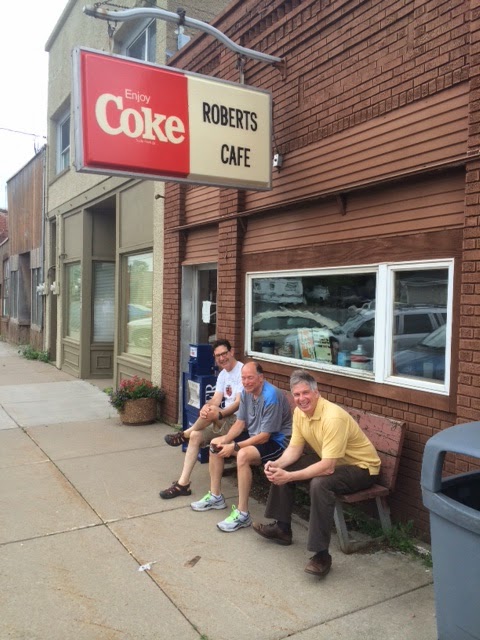
I have never really left college, though I did graduate some 30 years ago. This summer I joined one of my old peer groups for their annual weekend camping trips. Indeed, a great deal of conversation over the  weekend was around the topic of whether or not I had invited myself. I did, sort of, but I had a standing invitation to the upper mid-west from my friend Nep, who lives in Madison, where we all attended college together. This year the event was held at the new old farm house just over the Minnesota border to Wisconsin and owned by our friend  Rucksie. So that seemed manageable to me as someone who didn't want to fly in for a mere camping trip. Also there, was regular attendee, Wolfie, who lives in the Twin Cities near Rucksie.

It is amazing and comforting to be among people who knew you when you were maturing into an adult. (Maturing being a relative concept here.) I was surprised to learn of some of the quotes and stories these guys had been sharing about me over campfires for the past 30 years. I had forgotten much, and in some cases still didn't remember. But I had my own stories to tell as well, to bring a fresh perspective. The four of us had a terrific time

What I found were - at their core - the same friends who were great at listening, were warmhearted, successful, and compassionate. It was such a pleasure to catch up and to relive the college days and hear of new lives. Some of the memories were painful as we discussed friends we lost not long after graduating. And some were sentimental as we discussed other friends and where they were now.

This all was against the back-drop of some of the most biting, sarcastic, brutal, and hilarious ribbing and commentary I have experienced in years. Part of the comfort of being with old college friends is the speed at which you can resume acting like, well, college students. In addition, it seems that
wiener jokes and potty-humor never get old (one declared himself the "fart-king" of the weekend - a new champion apparently). We all noted at various times that we were professionals and family men. But still, when someone inexplicably falls off his chair in slow-motion (yelling "incoming"), or another describes a recent bathroom trip in detail, the tenor of the conversation and subsequent re-telling of new memories take on their own lives. So yes, we were connected by having deep -- and not so deep -- conversation as we slid back into familiar roles and  as we established new ones. One challenge for my friends to deal with was that I was committed to naps and chocolate. They buried me mercilessly for following the NBA draft at the campfire. To my horror, though, I learned that none of these friends understood any references to current music, Breaking Bad, or Game of Thrones. They seemed to prefer chores.

I love working with college students. Not just because they keep me current with pop-culture. For me, the strong friendships I made, then, have never faded. (And I am glad to have the peripheral ones have been revived thanks to Facebook, by the way.)

Nep, Wolfie, Rucksie. A-mid-wives!

This particular group of friends formed on my dorm floors my first two years at UW. Another group grew from my time as an RA in Ogg Hall. What blessings. And so it is gratifying as I see some of our own students find the same. Whether through their residence hall friends and roommates, athletic teams, theater, fraternities and sororities, course work and research, many find some of the same connections I did. I hope so anyway.

Today, most of our students find themselves at the beginning... of college, or the rest of their lives. Many wonder what comes next. Maybe just as important, they should think about what comes last. Along with selecting majors, going to graduate school, and finding jobs, something else will hopefully endure: The friendships. Before they know it, they will look up one day and remember when it all started. And where it led. To the end game.

Wednesday, July 2, 2014

Package Deal

I am asking students to think outside the box. The mailbox, if you will. For some time I have been discussing changes to the Coates University Center, and those changes are finally coming to fruition. Part of what sparked this was consolidation of Central Receiving operations on Kings Court with the Mail Center operations at the Coates Center. From an efficiency and business standpoint this made sense.

Additionally, I have wanted to move the mailboxes out of the Coates Center. On most campuses, mailboxes are in the residence halls. Our halls don't have main desks or spaces for boxes so they have been centralized up in Coates since 1987. They were actually placed in Coates to drive student traffic into the building.

The problem is that we have been using our best real estate in a prime location for static mailboxes. It is kind of like putting your air conditioner in your living room. But it is all we know so we haven't really questioned it. If you have toured other campuses, however, you quickly note that most have more current, modern, dynamic and interactive spaces in their university centers than we have in ours. We have fallen behind. At the same time, our building has a certain amount of charm to it and we don't need a new one. Most comparable institutions have their dining hall as part of their University Center - but we don't. What we need our space to be is not merely a pass-through facility, but a destination place.

Departmental mailboxes have been moved to CSI. We have moved the student mailboxes to the Tigers' Den, which will also serve as a game room. The only downside for students in all of this is that packages will now be distributed from the Central Receiving area on Kings Court.

So far, that hasn't been popular with students. Mostly there are concerns with distance and parking and waiting. This summer, additional measures have been implemented to try to minimize some of the issues. As with most decisions, there are choices to be made and trade-offs to consider. I ask our students to be patient in this transition and to consider what they are getting (a better University  Center, year-round) versus what they are losing (package pick-up in the center of campus). If each student considers the handful of times he or she receives packages against the potential increased use of the University Center as a gathering space, the trade-off will be worth it. 

When students return in August, they will find a much more comfortable and student-friendly place to relax, study, hang-out, and hold events. Among the changes:

- There will be a variety of seating options in the main lobby for those who want to sit at tables, sit in small groups, or work on a large table.
- The former mailbox area will feature technology options and a television as well as several different seating options.
- There will be tables with umbrellas outside of the mailbox area window.
- Upstairs Coates will feature small study areas for individuals and groups and a lounge area with recliners and sofas that can be extended for naps by collapsing the end caps.
- The Commons will hopefully feature a less obtrusive drink station and a new sandwich line.
- We hope to have the Commons open from morning to night without interruption.

Down the road, there will be many bigger changes to the facility as centers developed in the strategic plan will result in office re-locations throughout the building.

Most any change on a college campus is met with skepticism, initially. I assume that our students will love what they see, but will bemoan the issues with package pick-up. Give it a chance. Our students deserve a true University Center. These changes bring us much closer to that.

Thursday, June 5, 2014

My life as a blogger

This was my dinner and its mushroom at the annual President's dinner. The mushroom is CLEARLY in the shape of the Trinity tower. Mine was the only one like this. I think there is a story there. Don't you?
Editors note: Recently I wrote my 250th Dean's List blog post. I wanted to celebrate this milestone, because frankly, who else would? Now it might seem arrogant to interview one's self, and I will own that. On the other hand, I think I have demonstrated a willingness to embarrass myself (can you say "piano"?) and self-disclose very private things, like my love of 1960's bubble gum pop (can you say Petula Clark? And yes, clearly lip-synching...). So I think I have earned a right to be self-indulgent.
Q: So, I guess this is the obvious question - why do you blog?

A: I think it is important to communicate with students and parents in a way that humanizes the administration. I used to write columns in the Trinitonian and do a call-in show on Tiger TV. When blogging became a thing I thought 'hey, I can do that!' It lets me write at my own pace and when the spirit moves me. I also want a forum to add nuance to topics and to even correct misinformation.

Q: So how does the spirit move you?

A: I have a lot of weird thoughts. I keep most of them to myself. But sometimes I may see something, hear something, wonder something, and an idea just takes on its own life. Grieving Yolanda is a good example. I seriously thought the things I wrote, so just typing it out isn't necessarily work. It is just reporting what you think. Once I get an idea though, I have to write it, even if I am busy with other things. I can go weeks without posting and then do three in a row. Weird.

Q: So when do you write?

A: I compose most of my posts when I am running. The trick is remembering between the end of the run and when I can write.

Q: What do you love and hate about blogging?

A: I love Trinity! And I love the little stories that happen here that often others aren't privy to. We (not just Trinity) do so much in terms of manufactured copy with a positive spin. Sometimes for me the joy around here is in the little things and the people. I like to chronicle these things from a non-sanitized perspective.

Q: And hate...

A: I wouldn't say I hate anything about it. I guess you do kind of make a deal that you need to be personal when you blog. Otherwise you are part of the noise. So when you try to develop a voice or take a stand you put yourself out there to criticism.

Q: Really?

A: Well, yeah. I always felt like the worst way to be a Dean would be to not be known. I don't think there is anything special about me. But, I want students to know who I am. When the chips are down, I want them to turn to me for help or at least for a referral. So you have to find ways to be out there. Blogging is one way. The downside is when people have an issue with the administration they have a real person to attack.

Q: So please tell me why do it?

A: Some days, I don't know. I think the important thing is to be transparent. Our students really, really want to hear the truth and don't want to be condescended to. On the other hand, when you speak your truth, you open yourself up to criticism. It would be a lot simpler for me to keep my trap shut. But I don't want to be vanilla in that way. Sometimes it seems to me I am my own worst enemy...

Q: How has your blogging evolved?

A: Some of my early posts were simple news shorts. The more I did it, the more I developed a voice. I have also gotten bolder since I realized I am just a guy at a small school in Texas with a small audience.

Q: Any favorite posts?

A: Actually, yes. They are the ones about people. I just love the the unusual saga of the McCormick-Masse family. I continue to be inspired by a young woman named Chelsea Castillo and another named Catherine Found. How people cope with tragedy sometimes amazes me. The post about Alex Reinis was very personal to me. I never knew Alex, and his death makes me sad. I got to know his parents and friends after he passed and they are wonderful people. Again: courage. I was also inspired by Karyna and her pure guts. I am glad she let me write about her.

And it may seem strange, but this woman Louise, the census taker, just cracked me up. I also like this post because Butch Newman is one of the best guys ever. The story about these twins, who we let graduate even though one didn't attend here, was really cool. It was not like us to make an exception like this. I credit President Brazil for saying "yes."

Q: Well aren't you special?

A: NO! See, I was afraid of that. I love to blog but it is because I love the material. I have a unique vantage point based on my job. Trinity is special and so are its people. That's the point.

That's really the point...

Note: Thank you to my consultants Susie Gonzalez and Mike Fischer, who try to save me from myself.

Monday, May 19, 2014

Parting Ways


President Dennis Ahlburg, with his wife, Penelope Harley (above), share a private moment between the graduate and undergraduate commencement ceremonies on May 17, 2014. The President announced on May 14 that he would be stepping down from his role effective January 1, 2015.

Trustee Richard Calvert (left) reflects on his award for 39 years of outstanding service as a University Trustee. His father, James Calvert, was instrumental in bringing Trinity to its spot in San Antonio, and there is a residence hall named in his honor. Richard Calvert, like the late Jack Stots (trustee), Paul Smith (current trustee), the late Ed Roy (former professor and administrator), and Dr. Richard Burr (professor), is among those rare men that combine class, dignity, warmth, compassion, and leadership in their work. They are -- and were -- terrific gentlemen and role models for many others.

Joe Shotland delivered an amazing commencement address on behalf of the Class of 2014. But he had competition. On May 14 some of the runners up delivered their speeches in front of a warm and weepy crowd in the Tigers' Den. Nupur Agrawal brought down the house as she discussed how her admissions materials, meant for Trinity College in Connecticut, somehow were incorrectly sent to San Antonio. One college's loss is another university's gain. The rest, as they say, is history. This appears to be the start of a great new tradition.
A couple selfies from the big day. Above, getting ready to descend to the platform. Below, a quick candid with graduate Leah Wesselman. 
 

This is Carlos Martinez (above) at the annual Twilight at Trinity farewell party hosted by the Residential Life Office. Carlos is headed to medical school at Texas Tech this fall. Commencement isn't just about our graduates, but also about their dedicated families and friends. Megan Kruse, Class of 2014 (below - in white), is shown with her parents, who traveled from the Philadelphia area for this special day.
And finally, five members of the baseball team had their own private ceremony on May 19, 2014, because they were traveling during the regular commencement over the weekend. This is part of an excellent Trinity tradition that underscores how much the institution values the scholar-athlete.


Monday, May 12, 2014

Sixth Annual: The Year in Review - 2013-2014

Another academic year is in the books, and as is tradition, I take a look back at the year that was. While I try to think broadly, beyond the Student Affairs perspective, I have certainly missed some things, and invite the readers to post on those things in the comment section.

There will be a handful of posts between now and August, but look for more regular posting to occur when we begin the 2014-2015 academic year.

Top Stories

1. Sexual Assault
As the government beefed up regulations to improve enforcement of sexual assault policies across the nation's campuses, 55 colleges and universities found themselves under investigation. On campus a handful of cases drew attention of many and found their way into the local media.

2. Admissions
With two years of falling numbers the University came out swinging. The Admissions Office was moved to the center of campus - to the delight of their staff. Marketing efforts were implemented or strengthened, and financial aid awarding was adjusted, with terms being more transparent earlier in the process. The result? The Class of 2018 comes in at about 675, compared to about 550 last year. Wow.

3. New.Trinity.Edu
The new Web page, part of marketing efforts, went live on November 8, 2013. This page was designed to appeal primarily to prospective students and their parents. Looks like it worked. It has a nice feel to be sure. Some adjustments, especially for internal audiences, are still in the works. It would be hard for this to not be a top story as we see it daily, and its impact likely contributed to the high enrollment.

4. The Center for Sciences and Innovation (CSI)
To see it is to love it. This incredible facility is the new crown jewel of Trinity University. What an incredible facility. It represents the new liberal arts as well: multidisciplinary learning, productive collisions, and a learning and research hub.

5. CSI fire lane
In terms of day-to-day impact, nothing hit the campus like the new fire lane, which transformed the academic quad into a plaza. For once, an architectural rendering is bested by the real thing. Nicely done, TU. Thank you, fire department.

6. New curriculum
This should probably be number one in terms of long-term impact. However, while it was passed, it will not be implemented for some time, and it doesn't directly affect current students. As an advisor to the Student Government Association, I saw first hand how little time was spent on this topic.

7. Strategic Plan progress
Perhaps because a strategic plan involves so many constituents and so much review, the process has slogged on. But it is starting to come into focus. As with the curriculum, this probably deserves to be in the top two. Let's see if it stays on the list and jumps higher next year as its elements begin to come to fruition.

8. Triniteers and Pikes
The Triniteers fraternity was permitted back on campus after being away for several years. The lone national fraternity at Trinity was not allowed by Greek Council to take a new class.

9. ASR = SGA
The Association of Student Representatives changed its moniker to Student Government Association. This is clearer to students who used to have to work to figure out who was in charge. Former Dean Coleen Grissom and Prez Ron Calgaard, if they cared, wouldn't approve. One or both used to say that to call it government presumed there was power. Dr. Grissom, I know, was fond of saying that ASR had no power, but "great influence."

10. It's frrreeezing....
The school was closed or nearly closed so many times that it became mind-numbing. Brrrr.

Hits
- Women's Soccer goes to championship game
- Bowling for Soup plays "1985" at Welcome Back Concert
- Taco Taco comes to the Coates Center Commons
- Winn/Witt dorm renovation
- Pi, everywhere
- Duckapalooza
- The crowd at the Rock 'n' Roll Marathon represents Trinity as runners come through campus

Misses
- Bowling for Soup: They were right, people DID leave after they played their hit "1985."
- The push to move from division three to division one is immediately rebuked.
- Memes (grrrr)
- Tiger Taxi debit cards (need to sell, sell, sell!)

Under the Radar
- New staffing in Career Services means good things for our students.
- E-lerts
- Woodward and Bernstein (great lecture for those of us who lived through Watergate!)
- UIW shooting of a student (little air play, probably because it happened in mid-December)
- Alcohol. Little love anyone for trying to be think outside the case?
- Student Affairs rocks nationally

Big Hurts
- For the third year running, we lost a member of the student community when student Ernest Amoh passed away in early June while visiting his brother before his scheduled graduation at Dartmouth. Ernest's family traveled to San Antonio in the fall, and Dr. Nanette LeCoat, President Dennis Ahlburg, Coach Paul McGinlay, and Ernest's friends were wonderful ambassadors.
- TUPD Officer Mark Kelley died this spring when responding to a fire alarm malfunction in one of the residence halls.
- Many other important legends and friends were lost over this past year.


On the Horizon
- Look for a new old new era in Trinity football
- Coates Center lobby renovations/Mailbox relocation (look for summer post)
- Hopefully new dining options in CSI and Coates

Archives
Year 5
Year 4
Year 3
Year 2
Year 1

Bonus tracks
In case you missed it, here are some of the topics I got to write about this year. Trinity is rich with material:
Coates bacon
Campus sex
Magic Stones
NBA and higher education
NFL and higher education
Reading days


Sam named a Ram: Lessons from the NFL

So Michael Sam was selected this week as the first openly gay player drafted by a National Football League team. The St. Louis Rams chose the Missouri linebacker very late in the draft. The scene played out on television as so many do: a telephone call, tears of elation, and the tears of a supportive significant other. So there was another first: a new player was hugged and kissed by his boyfriend -- for all to see on national television. Seems to be the month for professional sports to illuminate lessons that play out to some degree on our nation's campuses.

We have known for several years now that there have been gay football players in the NFL. But it is a big step to "come out" in an environment that is so testosterone-driven. Just look at the Jonathan Martin case for a hint of NFL locker room behavior, politics, and stereotyping. (Count on a hazing post this summer.) Perhaps this is why the media has been fascinated by a college student telling everyone he is gay as he seeks employment with a pro football team.

When I first started working in student housing some 30 years ago it was very different. We didn't know a lot then about gay people, and most of what we thought we knew was dead wrong. Then came AIDS and what was seen as a shameful lifestyle seemed, by some, to suffer deserving consequences. But we figured it out as we learned from this era. The morality question has lessened, as we know more about biology, genetics, and orientation versus preference. The Bible still offers some a strong pulpit to question, but less than ever.

Years ago we more routinely dealt with complaints from students and parents when the new roommate was revealed as homosexual. Now, there is a different vibe. Most of our students have lived in a world where being gay is less stigmatized. They have relatives, teachers, neighbors, and celebrity role models who have normalized differences among people regarding their sexuality and gender. And they figured out it isn't a big deal. History is, after all, filled with stories of sex, romance, and power. Even the biblical (and heterosexual) David had his controversies. For many, a gay roommate is not a big deal now. More important is whether or not the roommate is funny and respectful of space and food boundaries.

What is more, the most conservative campuses are likely to have some GLBTQI student organizations. How could any college not? As students grapple with their sexual morals, behaviors, decisions, and lifestyles, finding a supportive network is crucial. And members of such organizations, their allies, and the student bodies in general get it. The campus and the student culture, while still having a way to go, is progressing.

Once, several years back, here, a candidate for student government on campus made some poorly planned remarks about his gay opponent as he was campaigning at a fraternity meeting. Then, when the fraternity pushed back, it was a sign the times were changing. Seems they didn't like stereotypes - especially ones that might paint a fraternity as homophobic. Indeed, I have seen openly gay students embraced by our fraternal organizations and we are seeing similar signs on male athletic teams. In this case, the gay candidate won and shared his story widely. In the end, he was judged not on his sexuality, but his effectiveness as a student government president. And that is how it should be.

Michael Sam, similarly, gave us a very personal glimpse of who he is when he was televised after he was drafted. It was touching to see him and his boyfriend sharing emotion and affection on TV. Maybe Mitch and Cam have prepared us well. And maybe one day, scenes like this will not seem unusual as they play out. Michael Sam should have been drafted higher. As the draft drew near its end, how could you not wonder how the defensive player of the year in college football's most dominating conference could free-fall like this. People could cite his 40 yard dash times and "tweener" body-type, but look at the weaknesses outlined on some of the other mid-to-late-round choices. So we aren't there yet.

The Rams drafted a man my Packers sorely needed, and the classy Jeff Fischer, Coach of the Rams, welcomed an "outstanding" football player to the organization. Michael Sam found acceptance from most of his college teammates and friends and hopefully the older pros will offer the same. As college players try to land roster spots this fall, maybe the old pros will learn from them, and Michael Sam, and college students everywhere. It's not a big deal anymore. The sooner the better.

Friday, May 9, 2014

Reading Daze...

Each year, those of us on the calendar committee determine and confirm the tentative University schedule for the subsequent five years. These decisions involve assessing the proximity of December graduation to Christmas, looking at the best place to start the spring, and making sure the local school system spring breaks match ours (we do actually do this).

Additionally, we schedule the two important reading days for students to have, ostensibly, to prepare for their final exams. In the fall and the spring, these days are often before or after a weekend, essentially giving students four consecutive days to study and possibly start packing up some of the items in their dorm rooms. So, many do what any self-respecting 18-22 year-old college student would do. They head to the beach with their friends.
A reading day tradition:
Midnight Breakfast.

Yes, organizations and individuals get away and blow off steam and celebrate the end of the semester. The work-hard, play-hard balance requires it. Students deserve to pamper themselves a bit with sun, sand, and suds. Those who don't, often use the time to sleep. (And of course, I know: Many of our students do use the time - or some of it - to study for finals.)

I don't have an issue with this per se. It does seem odd that we call these reading days. When I was in college I believe I used my "reading days" to do all of the social things I described above. I am in a glass house. My glass house was in Wisconsin and the Lake Michigan beach was less alluring than the Gulf of Mexico.But I played hard anyways.

In the last decade or two - I have lost track - some schools decided that a way to broadly curb alcohol abuse and the detrimental effects (such as people hurting themselves and each other or flunking out) during the year was to make sure there were early morning classes on Thursday and Friday. I think we have those anyways, so that was never a strategy by this institution. The idea, however, is for schools to socially un-engineer some things and not enable student bad behavior. Many of us in college administration spend great energy on trying to figure out ways to protect students from themselves. The students are winning, by the way.

What if we applied similar strategies, though, to reading days? We could, say, consistently schedule reading days alternatively, such as on a Tuesday and Thursday. This would not extend the calendar, simply alter where the reading days fall. From an academic preparation standpoint, this makes sense. It spreads out exams, so that they don't cluster so close together on back-to-back days. Students would probably make better use of their study time once they are in an academic groove, versus stopping class, wasting time, and then starting exams.I presume there could be similar advantages for the faculty.

I suppose schedule changing could just be seen as a way to stop students from having fun. Perhaps subconsciously, as a university official, and as a parent of college students, I wonder why I would support student four-day mini-vacays. I am working, in part (and in both my staff/parent roles), for them to grow, develop, learn, and mature. I'm not sure how "them" having all the fun meshes with any of that. (What's next for me: I start yelling at neighborhood kids to get off my lawn?)

In an age when college costs are significant, and when institutions are seen as refuges for the privileged, does this scheduling windfall for students make sense any more? Or does it reinforce negative stereotypes? Didn't students just have spring break? It might be time to at least start a dialogue on this topic in the calendar committee. I wonder how others feel (and I bet students and parents don't agree). Weigh in on the poll, upper-right and let's see. Or send in your comments.

In truth, reading days are among my favorite of the year. I have few meetings and the campus is quiet so I can get a lot of work done. And maybe I can even pull up some articles on college student development I have been saving. For me, and many of my colleagues, it can be a perfect time. For reading.

Wednesday, April 30, 2014

Sterling, Silver: Lessons from the NBA

Leonore Draper (see number 6., below).
The recent well-documented controversy over racist remarks by Los Angeles Clippers owner Donald Sterling - and subsequent action by Commissioner Adam Silver - can inform several issues we deal with on college campuses. People have been taken aback by the audacity and hypocrisy of Mr. Sterling's conduct. His characterization of his players, not as wage-earners, but as beneficiaries of his generosity for food, clothes, and cars evokes images of the plantation owner. His conversations with his girlfriend about her behavior (when that girlfriend is being sued by Mr. Sterling's wife to get back the gifts Donald gave the woman) are offensive, not only for their racism, but for the utter lack of regard he shows for women - particularly those he supposedly cares about.

Commissioner Silver's swift, firm, and decisive action is being lauded by virtually everyone not named Donald Sterling. It is a rare instance of a decision-maker and leader seemingly throwing caution to the wind and doing the right thing, even if it might invite a lawsuit. Certainly he consulted owners and considered legal consequences, but it is millionaire money at the end of the day, and a lawsuit won't bankrupt the league. A weak response could do some harm, though. And it appears he knew a lack of firm leadership could result in playoff boycotts (which were being threatened), loss of sponsorship, and years of mistrust between ownership and players. Still, he did a sniff test and did the right thing.


But I don't write to dissect the conduct of Donald Sterling, per se. There are lessons here, however, for those of us in higher education:

1. Racism and misogyny still live in the hearts of many.
Why do colleges and universities care so much about diversity and social issues? Because racism is morally wrong, but also because for the under-represented to have an equal chance they need an even playing field. Offering access to racially, culturally, religiously, sexually-oriented, and socioeconomically diverse students makes for a better educational experience for all students. It is fair and right. Embracing, rather than marginalizing students, and helping all students flourish in an emotionally, intellectually, and physically safe environment is imperative.

I meet from time-to-time with our diverse student groups on campus. They deal with issues, beyond ism-ism that others don't: assimilation with others in balance with a supportive cohort group (why do you all eat together?); serving as spokespersons for their groups; and even being the ambassadors of their groups - feeling subtle pressure to make only positive impressions. All schools are one drunk-with-a-magic-marker away from a Sterling-esque incident. Such are followed by forums, task forces, and damage control... until the next incident.

If racism can prevail in a league with such a large African-American population you can bet it is everywhere. It has no place in sports, and no place in the marketplace of ideas that is higher education. In other words, we will keep addressing issues of diversity and social justice.

2. Grassroots efforts to address social justice issues work.
Coach Doc Rivers and his team made appropriately measured comments and acted with peaceful civil unrest. This was an easy case in which to do so, because there is not a lot of wiggle room based on the Sterling tapes. History is filled with the victims of injustice rising up against oppression. Mr. Sterling's words were hardly oppressive by comparison. But the hate and ignorance cut to the core of the players (and most others). So they took action.

The student displeasure with handling of recent sexual misconduct cases, offers an excellent example of students showing that they can mobilize about something that truly matters, and see their opinions and actions make a difference.

3. Free speech is a fundamental value nationally and on college campuses.
While Mr. Sterling may say what he wants, there are consequences. The first amendment is about the rights of citizens to challenge their government openly. It is different in private matters. This may surprise people who read me, but I have many more opinions than I have ever expressed here over the years. But I have an employer, I am here by choice, and I generally love Trinity University. And I like being paid. But I can't say whatever I want. Mr. Sterling wasn't taking a stand. He was running off at the mouth. I think people would care more about his free speech, if it was to fight injustice, not demonstrate it.

We don't have free speech zones on our campus. I feel like the whole campus should be a free speech zone. This is what learning is all about. I urge my staff not to be the ones to remove questionable postings on bulletin boards, for example. Or at least give our students the first chance at it. I learned this once, the hard way. And while I felt righteous, I robbed our students of a chance to act with courage. While we must, as administrators, denounce such bigoted behavior, and participate or lead the conversations, I have seen better results when students set the standards of the community. That is where learning blossoms. Years ago some conservative students held a bake sale, that they thought mirrored affirmative action. Students were beginning to push back. Some on the staff were offended by what they felt were undertones of racism and shut it down. Guess what... The bake sale sponsors became first amendment martyrs and all of the learning was lost. The discussions about the event turned into a debate about free speech.

4. It has been interesting to watch the process unfold.
Indeed, the NBA is a privately-run organization (not unlike Trinity University). Mr. Sterling was not facing jail time or execution. He did not meet the code of conduct expected of him and was removed. Presumably the NBA Board of Governors has some policies and some procedures in place (not legal due process), and is implementing its process fairly. The parallels can be instructive in campus conduct systems, where generally the courts have held that students have the right to know of the allegations against them, deserve timely notice, and should be able to refute and challenge the evidence against them. People have freedom to attend institutions they are eligible to attend - and pay for. They also make choices and face consequences. They are accountable for their actions. The institution has a responsibility to the individual, but also the greater community and to protect its reputation.

5. Social media and talk radio/TV have changed everything.
Having been the target of false information and rushes to judgment, I have experienced this firsthand. I hate that a small part of me has this nagging feeling that we have seen a person vilified in the media, on late-night talk shows, and in the court of public opinion in such a rash manner. It feels mob-like. Justified or not, I have never been a fan of mobs. While I don't like the comments from Mr. Sterling and don't care for his actions in any form, I am just uncomfortable with how fast everything happened. The swift action of Mr. Silver is applauded by prominent people everywhere. People have latched onto the sound-bite, had their need for justice satiated, posted their tweets, and are ready for the next controversy in which to insert themselves. Maybe I need to get used to that. I am not one who takes a long time to form opinions, so I should like this. I hate congressional hearings and chest-thumping. I just feel uneasy, though I don't want to.

Several years ago a group of students went dorm-to-dorm, pulling late-night fire alarms. Students everywhere demanded expulsion. Until they found out who the students were. They were well-liked. And suddenly people saw things with less conviction. We all need to learn patience. In the recent sexual assault conversations, many called for action having never read our policy. We teach information literacy. As educated citizens we need to be swift, but thoughtful.

6. Perspective and context matter.
This gross, rich, white man of privilege said something really wrong and dumb. It is all we have heard about for days. And yet... Leonore Draper was shot and killed. Donald Sterling is easy pickings. And Adam Silver is the new Rudy Giuliani - courage and leadership in a crisis. Worse is happening, and so is better, but it isn't as neat and sexy. So we spend time on the sensational and ignore the meaningful.

We need to be committed to teaching our students to understand the difference.