Google Analytics Tracking Code

Friday, January 23, 2015

Is the Residency Requirement relevant any more?

Boxed in...
On the first night of the new year for the Class of 1996, my mentor and colleague, Coleen Grissom, announced an important change. With great enthusiasm and carefully chosen language, Dean Grissom told the new students they were the fortunate ones to be the first beneficiaries of the new three-year residency requirement (rather than two). Of course they didn't really buy it, but I am not sure she did either. Some twenty years later I share the ambivalence.

President Calgaard, the driving force behind this, once told me he didn't really care if students wanted to move off for their senior year. The kind of campus community he envisioned was residential and the best way to ensure it was to require it. It made sense. There were few apartment complexes near or around Trinity. Many of our students had grown up living with siblings. Community was defined differently before technology changed the nature of it.

Today, privacy is at a premium. Having a roommate in the first year is usually more good than bad. Choosing one for the second year follows naturally. By the third year, students -- who willfully signed on to the residency requirement as high school seniors -- often come to resent it.

Here are some of the problems, simplistically stated:

1. Privacy
Students tire of conforming to the schedules of roommates. While there are social benefits to roommates and suite life, there is simply no place to escape to for self-determined sleep, study, and I dare say, sex.

2. The Meal Plan
The quality, variety and value of our meal program is exceptional. I honestly believe that. But, for some students, meal programs lose their luster after two or three years. (Sooner for some!) Students who haven't tasted their own cooking, cleaned their own kitchens, or shopped regularly for groceries, are eager to prepare their own meals. Not having that option becomes a real point of conflict. And it is very real. For many this is about freedom, flexibility, value (Ramen Noodles), and health.

3. Cost
When we last compared housing rates off campus, with utilities, transportation, and other hidden costs including loss of time, we were generally comparable. But that case is getting more difficult to make, especially compared to apartments with kitchens and bedrooms. Students see value in amenities and double rooms can't compete with spacious apartments and neighbors named Hutch and Roxy.

4. Campus Apartments
More and more, students are being offered campus apartments at other residential campuses, often with full or double size beds in single rooms. Many can sign up for these by their second year. We have no apartments here, and by year-three, students want those living options.

5. Paternalism
The word "requirement" doesn't sit well with students these days. It implies that something is required. Ahem.

The idea of a residential campus has been romanticized by some over the years. It is noble, to be sure. There are many benefits to living on campus. But I would much rather have students clamoring to stay on campus than fighting to get away. We should rise to that challenge. Some people aren't made for dorm living. Like some couples who have parted ways, sometimes it is better for everyone (in this case, the student and the institution) to get some space. Some students don't care about laws and policies related to alcohol and drugs. The staff would rather not have to enforce those policies either. The resulting tension, again, is harmful to the University and the students.

The numbers show that most want to stay on their junior year and about a quarter decide to stay on their senior year. Most like the convenience, the energy, the engagement, and the proximity. Many who move off miss those things and acknowledge the deficit in the trade-off. They report feeling disconnected. Others love their freedom.

Campus apartments can be costly to build and with so many options near campus, may not be necessary. Another option is to offer single rooms -- for busy students who could reap the benefits of life on campus while at the same time having more autonomy and privacy. A promising step in that direction is the current renovation of North Hall, configured for singles. Though the rooms will be small, for many of our busy juniors and seniors that won't matter, they don't spend much time in those spaces anyways. If this renovation is well-received, then subsequent upper-class halls slated for renovations will be reconfigured accordingly.

The most disheartening aspect about the requirement is that students who want to leave a year early feel trapped and are often negative about their experiences and the institution. The requirement creates significant tension between the students and the Residential Life staff and me. Lost on most is that this is an institutional requirement. But the staff who must uphold it are routinely being challenged, leaving students and parents angry and frustrated. Indeed, the staff has learned that offering exceptions leads to charges of unfairness and inconsistency. Every student feels as though his or her situation is unique. To each of them it is. But students demand consistency. Why shouldn't they? You can see the conundrum for the staff. Listening and treating each case with care, and making exceptions, invites an opening of the proverbial flood gates. Not entertaining requests because they most always end in "no" is no more palatable. Being at odds with our students over an institutional edict affects the effectiveness of the very staff members who are working to support and advocate for them. 

What is more, many students think this is about the money. While that is a contributing factor for some (more revenue creates more for initiatives for students or for controlling costs), it isn't the only factor. Many people who support this requirement believe this is our identity and that it is good.

There has to be a better way. The institution likely won't consider apartments that may be too costly right now. Hopefully the single rooms prove to be attractive options for students. Maybe we simply entertain requests more liberally. In the end, there a number of issues worth re-visiting. We would likely better serve students and enhance the way they feel about the institution by discussing this in more detail. What made sense twenty years ago may no longer fit.

Please comment and take the poll!

Banner Quotes Capturing Attention

1.
2.
3.
4.
5.
6.

7.

8.
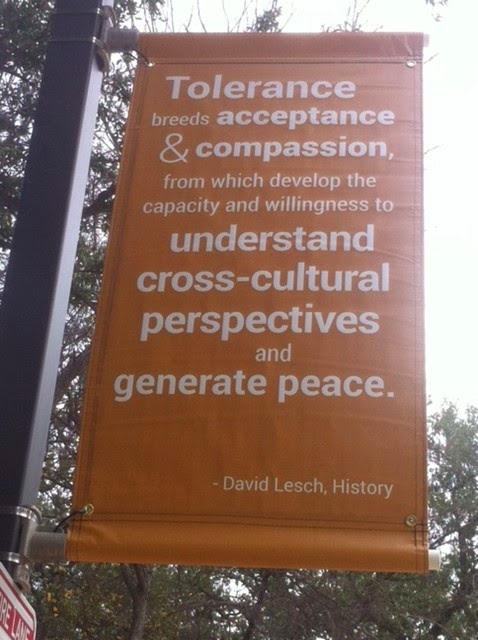
I have to admit, I was lukewarm about the banners that recently sprung up around campus. Like Epcot Center, they just seemed too educational and not Magic Kingdom enough. Maybe this is why some faculty members have called me anti-intellectual (whatever that means). Then I heard Interim President Mike Fischer raving about them, which pretty much convinced me I was right. So in January, while meeting with the RAs, I asked their opinions. To my surprise, they loved them too. For the simpler people on campus, such as myself, I thought I would put the quotes into plain language, Cliff Notes style.
Please have some fun matching the banner photo, above, with the paraphrased quotes below. I have cleared these with the professors themselves.

A. "Be optimistic, even if you are a prominent expert on the Middle East"

B. "Grades aren't everything."

C. "Work hard, Play hard."

D. "There's a fine line between camping and Biology."

E. "Come check me out in the weight room."

F. "Don't waste the money someone is spending for you to be here!"

G. "Please take my course on the Aeneid."

H. "This is why you aren't in Platteville."

Answers: 1-B, 2-A, 3-E, 4-H, 5-C, 6-G, 7-D, 8-F

Tuesday, December 16, 2014

Prevention and Education the Keys to reducing Sexual Assaults

Editor's Note: This is a two-part piece related to sexual assault. The first installment, related to policy and procedure, may be found here. For more background, please review this post from last spring.

By Senior Staff Psychologist Kristin Eisenhauer


The Education and Prevention Subcommittee of the Coalition for Respect is comprised of students, alumni, faculty, and staff, and is led by Dr. Sheryl Tynes.  The committee met four times this semester to address issues related to assessing campus climate around issues of sexual assault; coordinating a cohesive educational campaign for our campus; and exploring ways to hone our sexual assault prevention efforts in a meaningful way.  At this time, the following progress has been made:

- We have reviewed feedback from the 2014 NSO Sexual Assault Prevention program and have made recommendations for modifications.
- We have decided to administer the Higher Education Data Sharing (HEDS) Consortium’s Sexual Assault Campus Climate Survey to Trinity students when it is finalized by the consortium in the spring of 2015.  The HEDS survey is rooted in the White House’s guidelines for measuring campus climate around issues of sexual assault and relationship violence.  Trinity’s survey results will shape our future education and prevention efforts.
- We have selected a keynote speaker to come to campus in the spring of 2015.  This speaker will address all students about issues related to sexual assault and relationship violence in Laurie Auditorium and will also provide special training sessions on these topics for student leaders and members of the Coalition for Respect.
- We have begun to map out the content and timing of campus programs and assessments related to sexual assault and relationship violence prevention and are working to brand an overarching theme for these efforts.  Our goal is to launch a cohesive educational campaign that includes active programs, passive programs, and ongoing assessments.  In this vein, we are in the early stages of exploring a Valentine’s Day event that will encourage healthy relationships.
- An assessment of First-Year and sophomore students’ bystander behaviors is currently under way.  This is part of an ongoing assessment of students who have participated in the Step Up bystander action program during their New Student Orientation.  

The Education and Prevention Subcommittee has four meetings scheduled in the spring semester to continue building our campaign.  We invite individuals who would like to become involved in our efforts to contact Dr. Kristin Eisenhauer.

Sexual Assault Continues to be a Difficult Issue

Editor's Note: This is a two-part piece related to sexual assault. The second installment, related to educational efforts, is by Senior Staff Psychologist Kristin Eisenhauer. For more background, please review this post from last spring.

With regular reports of victim re-victimization, lack of fairness, campus bungling, and government over-reach, sexual assault on campuses continues to be an important topic nationally. While most campuses have grappled with this issue for a long time, the 2011 Department of Education's Dear Colleague Letter, related to Title IX, offered guidance for processes to be more deliberate and transparent.

This has been positive in that it reinforces that schools must continue to address violations of sexual misconduct policies. Institutions generally deal with student conduct to to ensure a safe and healthy learning environment. It is appropriate for campuses to deal with any claims of student harassment and violence.

The rapid changes in legislative requirements and guidelines and the amount of press on the topic have sent administrators scrambling to keep up. It is important for campuses to follow and adhere to legislation while still thinking for themselves. Chasing laws and bowing to public pressure can be confusing for institutions and their constituents. On our campus two guiding principles will always inform our policy and procedures. First, the process has to be fair, and second, it must be executed with compassion.

In the summer of 2014 Trinity's policy was re-written, presented to the University community for comment, and approved by the Standards Committee. This was the second change in three years and the new policy has been generally well-received. It is likely that the policy and our process will undergo annual revisions as both evolve.

The new investigative model places less emphasis on hearings and more on fact-finding in advance. This helps staff members discern important information, and make recommendations, in a more private and more thorough manner. With the sharing of statements and reports, the process is fairly transparent. A pool of faculty and staff members serves in multiple roles as investigators, hearing board members, and process advocates. More and better trained people are involved with multiple facets of the process, which will hopefully instill confidence in the broad ownership of our process. This group will meet each semester to review cases and suggest procedural improvements and policy changes as needed.

Our standard remains "the greater weight of the credible evidence," which means there must be some evidence, whether it is direct, indirect, circumstantial, based on aftermath reports, and takes into account the credibility of the parties involved and the information presented. Once viewed, the decision-makers must determine whether or not that evidence presents the likelihood that a violation did or did not occur. Part of the tension around assault cases is that there is little evidence to begin with. At times it may appear that a student has brought forth a legitimate complaint, but the process must reveal that a policy violation occurred. This presents tremendous challenges for the accused and accusing students and the decision-makers.

At a forum this fall, students and staff discussed one of the many vexing issues related to assault. Deciding when a person is incapacitated is extremely challenging. When alcohol is involved communication are decision-making are confounded by conflicting, incomplete, and inaccurate recollections. Two themes emerged from that forum and will likely be incorporated in the policy in the future.

First, any time a person engages in sexual activity with a person who has consumed any amount of alcohol, that person may may face an allegation of sexual misconduct. This may be be in conflict with an alcohol-fueled hook-up culture, but it does put students on notice.

Second, intoxication and incapacitation need to be more clearly defined. Being drunk, or even blacked-out (when a person may seem coherent but later have no memory) does not necessarily mean that someone is incapacitated -- or that another should know the person is incapacitated. Incapactiation generally means that someone cannot function on their own. An intoxicated person can drive a car or send text messages, while an incapacitated person probably can't.

Unless force or coercion are involved, sexual interactions between those who have been drinking are likely not considered violations of policy. In many drunken hook-ups students are taking advantage of one another for their own gain. If they would not have done so if completely sober is in many ways immaterial.

At first glance it may seem these elements are contradictory. Any sexual interaction with someone who has been drinking can place someone at risk of an accusation, but incapacitation goes beyond simply being buzzed or drunk. In part, this will set-up some general expectations and express caution to students. These areas will have to be considered on a case-by-case basis.

Further complicating matters, a person who has ingested a date rape drug is likely incapacitated, though this may not be clear to others. It is imperative that anyone who feels they have been given a drug be tested immediately as such drugs leave the blood system in a relatively short period of time.

Student empowerment remains the most potent weapon against sexual assault on college campuses. Policies and procedures are of limited and reactionary value compared to student action. In the context of binge-drinking and parties, students must step up to protect themselves and others, unfortunately, from one another.

Most importantly, the biggest issue of all is the impact that this issue has on accusing and accused students. Student versus student conflicts produce some of the most challenging conduct cases on campuses. In most other cases (alcohol, drugs), where university policy is in conflict with student behavior the university is not emotionally invested in the outcome (of course the student is). In student versus student cases, at least one student will walk away feeling unheard and unsupported. When students square off against one another, with attorneys and parents often involved, and high emotional stakes and consequences on the line, there will almost always be negative or ambivalent  feelings. Even students cleared of policy violations sometimes can never see the institution in the same light. And for accusing students, though a finding of "not responsible" only means that there was no evidence of a policy violation, these decisions often result in feeling great disappointment, anger, and a lack of support.

For the institution, it is common to hear from those unhappy with a decision that they find the process to be flawed. The blurry lines between policy violations and crimes, and their consequences, make matters worse. Many erroneously expect legal standards in a process that is anything but.

Given all that is at stake, one thing remains certain. There will be winners and there will be losers. In the end, that means we all lose. The campus community has a responsibility to not just be engaged in this topic in reaction to high-profile cases. Students must work with the faculty and staff to create a safe and respectful campus climate to reduce and eliminate issues of sexual assault.And when cases arise, the institution must conduct thorough and professional investigations and hearings.

In January the Coalition for Respect will re-convene to review the work and cases from the fall.

Saturday, November 22, 2014

Doin' the Trinity Shuffle

Some of the crew following the 10-11 mile taco run.
One of the joys of my work is the annual Dean of Students Half Marathon Challenge and Food Drive. You get to know students well when you log lots of miles together. Generally on our group runs we eschew music, but last month we mixed things up by doing an iPod Shuffle run. Literally, we shuffled our music gadgets at various points during the run. It was a nice way to break up the routine and to hear what others listen to when they run. We also have had a Hunger Run, Taco Run, and Halloween Hill Hell Run. (Please come support us on December 7 as we run through Trinity!)

I had some very good stuff, IMHO, on my iPod Shuffle. Below, Sarah Kate references the song "Sexy and Free" which I think is called "Domino," by Jessie J. It has been a long time since I would ever have claimed a song called "Sexy and Free." Like never. She did get through a little Springsteen, for which she receives extra credit. I also have to laugh that our students think "Call Me Maybe" is a classic. I just don't think a song from a 17-year-old could already be considered classic, but it kinda is. Finally, Simba is not on Facebook but he did report that hearing jazz on someone's iPod was troubling. This from the guy who never met an explicit lyric he didn't like...
So I asked everyone involved to post their thoughts on our Facebook group. Without further adieu:

The Dean
My Trinity Shuffle was SO fun. I first listened to Simba's music and was happy to hear a song by the Neon Dragons. It was followed by a song called "Selfie" which made me laugh but which I never hope to hear again. We shuffled again and I landed on Joseph's tunes and was generally pleased. Totally Joseph - a little predictable and a little quirky. Quite happy to hear a song by the Imagine Trees. Okay, I actually have that ID CD and it was settling to hear. Then a song came on by Gaslight Anthem. It was called Meet Me By the River's Edge and I guarantee that Joseph has no idea this is a Bruce Springsteen tribute song! Mostly though, Joe would have been very comfortable with 80's hair bands, modern REO Speedwagon, and maybe even Head East. I was prouder of my self than I should have been for announcing that Jared Leto was the led singer from 30 Seconds to Mars, also on Joe's phone. (And Joe, I was just kidding about getting my dog's poop on your phone. As far as you know.) Thanks for the tunes Big Joe!

Joe
My shuffle run was with Mikki's iPod. Not a big Nikki Minaj fan, but at least wasn't stuck with anaconda. Loved hearing some coldplay and empire of the sun though.

Mikki
My Trinity Shuffle was Katie's iPod, and I loved it. I really like the Red Hot Chili peppers, although after a silly mistake we realized it was on the wrong shuffle... once we changed it to her REAL workout mix I was listening to Flume and Madonna and other great pump up songs! I added them to my own workout mix. EVEN BETTER than this story though, was getting to listen to a few minutes of what KATIE had... ahem... Dean Tuttles' playlist!!! I'll let her tell you the entertaining details, though.

Katie
The iPod shuffle run was quite a hoot. I really enjoyed listening Call Me Maybe on Dean Tuttle's iPod shuffle. That song is a classic!!! I'm glad we have a Dean of Students that recognizes that. Galve's playlist was quality as well. Some dude named like Young Gangsta or something got me in a flow state for like the last couple miles so that was good. Young Gangsta is quite a talented guy. Overall very fun run!!!

Correction by Galve:
His name is Young Sinatra. Might as well be a G though, ya hear me?

Galve
For the iPod shuffle run, I'm always slightly nervous. Maybe that people won't like my music, or that maybe we will all get hit by a car crossing the street because we were listening to music instead of traffic. After a while and the nervousness passes, I relax and enjoy the run. I had Joseph's iPhone for a bit at the beginning, and he had some great workout tunes, some that I have to download myself. I also noted the possible danger of running with an iPhone in hand. For all those that run with electronic devices, it's safest to have it on your arm or in a pocket. In chance of the potential fall (unless you are skilled and have never tripped when running) you should have both hands free to break your fall, instead of breaking your phone and/or a possible bone. Also if you are running with dog poop, then you have less chance of getting it on your phone if it's on your arm or in your pocket. In final, there was no Taylor Swift played on any of the playlists I listened to, so I was able to completely enjoy the rest of the run.

Sarah Kate
The iPod shuffle run was pretty great. I really enjoyed listening to Young Sinatra and Dean and Ravo on Galve's playlist, especially the song "Walkin Around" by Dean and Ravo. I also got to hear Dean Tuttle's playlist, my favorites being "Call Me Maybe" and "Sexy and Free". I also got to jam out to some Bruce Springsteen as well. Overall a super fun run!!

Friday, November 14, 2014

Yik Yak Yuk

Let's be clear about this. People have been crude and rude forever. I mean, just watch Game of Thrones. The internet has simply changed the nature of boorish and hostile behavior. Just read any comments section on any post to witness the pattern of trolls stirring up trouble, counter-arguing, policing grammar, and getting all charged up over nothing. It is like Disney. It's mostly make believe.

When JuicyCampus came on the scene people were outraged. Indeed, bullying and other horrible things have happened as a result of the internet and social media. That site was shut down because of the resulting harassment and personal attacks on students. But other sites have replaced it. Currently Facebook's Trinity Confessions and Overheard at Trinity pages are making way for a new site called Yik Yak.

This is a location-based app that allows people who are in proximity to one another to post anonymously. It has some advantages to it, in that posts are pretty fleeting (as new posts come in, old ones drop off). People can up-vote or down-vote posts as well as reply. If a post is down-voted five times it disappears. Generally people cannot be identified by name.

As far as these things go, Yik Yak isn't the worst. Generally, people want to invite others to have sex, bemoan having a cuddle buddy, or try to be witty. Popular posts often start with "When..." as in, "When you are at a party and they run out of beer..." 

Obviously I check out Yik Yak from time-to-time. I think it is important to know what is out there that is engaging some of our students. If you are on the app you can search for other schools to see what is being said. Most reasonable people will immediately wonder how it works... for people on an anonymous site to ask for sexual favors, because it makes zero sense. But that hasn't stopped the masses. 

My biggest issue with the app is that while I have only posted once or twice, my posts have been down-voted into oblivion. One of them was of the "When..." kind, which I clearly had not thought through. Here is another example. Because of our proximity to SAC and Incarnate Word, it is difficult to sometimes discern the higher education institution of origin. The posts are co-mingled. I am often hoping the worst of the posts are not from Trinity. So my post was simply this: "If the source is not otherwise obvious, why not use #Trinity or #UIW?" This was a very productive suggestion. But boom. Off. Like, immediately.

I told my wife about this on our way to a movie that night. And we did not have a fight about it that she won. But she said that I shouldn't "play in the students' sandbox." I was not playing in their sandbox. I just wanted to understand it. She said students could sniff out a grown-up in a second. So, I was voted down by the students and my wife - who told me not to take it personally. And yet "Just applied to be Wacka Flacka's blunt roller. Wish me luck" is trending up with 35 affirmative votes as I write this. What a stupid sandbox.

But I had a plan, which was to post this: "This is the Dean, and I thought my post about using a hash

I no longer become angry or get all high and mighty about these sites. The arguments for or against are always the same. But here are some observations gleaned over the years:

1. Most of what is out there is trashy: sexual, fecal, and anti-social. It is like a Student Affairs meeting.
2. Most of the things are posted to elicit responses.
tag to specify the campus being cited was a great idea!" Then someone would have posted: "Is this Dean Tuttle from TU or Dean Moore from UIW?" To which my response would have been: "Exactly!" That would have been my throw down the mic moment on Yik Yak. But my wife, who is NOT the boss of me, wouldn't let me post any more. And she IS my cuddle buddy after all.
3. Most of the responses are meant to elicit reactions.
4. Many of the things posted on anonymous social media sites are not true, are exaggerated, or unverifiable.
5. If the electronic mob follows it, then people will engage with it. If you don't like it... Ignore it. Rock beats scissors, mob beats reason.
6. You can't permanently stop these sites unless they are literally criminal. It emboldens people and they find other channels to migrate to anyways.
7. It will pass. It always does, because it eventually becomes boring. And then a new platform arises. And then it passes.
8. Even if someone posts as a female, it is probably a male.
9. This is like a sport for bored people or those taking a break from work and study.
10. Sometimes grown-ups, or even deans, get sucked into these things.

Last year I was pretty much run off of Overheard at Trinity when I simply joined to retrieve memes of me for a blog post. Geesh. I have learned my lesson. I may check out Yik Yak from time-to-time, to, er, be effective at my job... But I won't be playing any more. Too much sand.

Thursday, October 23, 2014

Logos and Tigers and Brands, oh my

As Trinity University continues to develop its brand, the University has recently revealed a new spirit logo. This one replaces the tiger on the TU symbol that has become popular with our athletic teams. Unfortunately the latter can't be trademarked because it kind of already is - by the Detroit Tigers baseball team. Though really, how many ways can a tiger menacingly crawl around a "T."

Logos are tricky because they are used in different ways. At Trinity we want some consistency, but we have the official seal for the more high brow uses, such as on diplomas. We have the tower logo for the more day-to-day business uses. And we have the Trinity over Texas football helmet and the aforementioned tiger spirit logos, old and new.

But maybe it is time we reconsider the tiger altogether. I am sure it would be blasphemy because the tiger has a long Trinity tradition and the alliteration works. But it really isn't THAT unique, or for that matter, descriptive. After all, we are in an athletic conference with the Tigers of Colorado College and former conference Tigers included DePauw and Sewanee. And there is LSU, Clemson, Missouri...

Names matter, especially to alumni. Southwestern considered changing away from Southwestern because well, it isn't really Southwestern. That discussion did not go well. Texas State used to be Southwest Texas State but changed that, maybe because of the confusion with Southwestern. But Southwest Texas State was once called SWTS Normal school, so name changes seem normal to them. No one would ever suggest that Trinity change its name, though its roots and religious under and overtones cause some confusion related to its identity.

But I think mascots can be more easily changed. The Incarnate Word Crusaders became the Cardinals, the Marquette Warriors became the Golden Eagles, the Syracuse Orangemen simply became the Orange, and the Washington Redskins... Oh. Bad example. To me, the best mascots reflect time and place. New Orleans Jazz was good. Utah Jazz, not so good. My Milwaukee Brewers, in the land of beer and brats is perfect. Other good names include Bucks (deer hunting), Trailblazers, Steelers, Longhorns, Spurs, Padres, and Yankees. Note that none of those are birds or random animals. So I propose we consider changing the name Tigers to something that is more Trinity.

10. TU TTLES
Hmmm, that just seems TOO obvious. But the logo would be cool.

9. Trinity Onesies
As in Number One in the West since the West was One.

8. The Feral Cats
This is the only animal entry, but given the popularity of the Trinity cats and the fine work of the CAT Alliance, it does deserve consideration. And we can say we will neuter the opposition - but at least we will feed them.

7. The Trinity Taco Tacos
We are hot! And how easy is the cheer "Go Tacos Go!"

6. The Primarily Undergraduate Liberal Arts and Sciences Residential Institution with Professional and Pre-Professional Programs TIGERS
We seem fond of that...

5. The Grissoms
Beloved English teacher, famous Dean of 30 years, straight-talking, quick-witted, sharp-tongued, extremely brilliant, organized, pet-loving, polarizing, and hilarious East Texas Girl... We get her and love her. She is we. That's all that matters.

4. The Trinity Quarry Rockers
How tough is that. Even though, technically we just live and work on an old quarry, dammit, we are still Quarry Tough!

3. The Trinity Towers
We tower over the city, the competition, the, well, everything...

2. Trinity Ampersands
This is the perfect tie-in to our marketing campaign. Our students are athletes & engineers; actors & senators... And when it comes to athletics we will win & pummel & route & destroy. And most importantly, we can call the Stand Band the AmperStand Band.

1. TRINITyONIONS
Yes, that's right. The Onions! A play on the word "Trinitonian." You can't cut us! We make the opposition cry. We have many layers. We're bad man. We're really bad. Go Onions Go. Slice 'em up, Dive 'em up, Peel 'em back, GO!

On second thought, Tigers works too...

Sunday, October 19, 2014

High and Mighty

I blame Colorado mostly. Nearly any conversation with a student or a parent regarding our drug policy and state drug laws eventually includes a reference to Rocky Mountain High. It has become the "my friends don't have a curfew!" of marijuana discussions.

I don't want to confuse any portions of this post with the facts. Nearly all of the facts related to marijuana can be disputed. Students on college campuses everywhere have done great research to de-bunk any claims of harm that comes from smoking weed. I think if some studied their course work with as much passion as they researched marijuana we would be a far smarter nation.

So here are some things I will stay away from arguing: Marijuana may or may not be addictive. It may or may not have long-term health risks. Its legalization may or may not benefit or hurt Central American producers and distributors and drug kingpins. Everyone may or may not do it. Smoking pot may or may not increase the popularity of potato chip nachos at Mabee Hall. Getting high may be considered trendy, funny, cool, hip, and natural. Smoking pot may shrink ones testicle's and it may sap one of energy and drive.  Pot is or isn't a gateway drug. It may or may not be true that those from privileged white backgrounds are jailed far less than impoverished black men with few options to get ahead in the ghettos and educational systems they were born into. (Okay, I am pretty sure that one is true.)

Most universities are required by law to enforce drug policies or risk losing financial aid. One day that may change. At Trinity we don't allow 21-year-olds to have hard liquor on campus even if they may have it legally off-campus. This is to deter binge-drinking, not that it is particularly effective. So if and when Texas legalizes marijuana I still wouldn't want it permitted on campus.

Mercifully, here is my sure to be unpopular hypothesis: College campuses are no places for drugs, including marijuana. I have my reasons.

1. I believe two primary things about college. First, colleges are places of higher learning. We have communities of scholars and we espouse that we are building global citizens for a better world. A quarter of the population makes it to college and far less graduate. It is a rare and special privilege. Students nationwide will eventually cure cancer, find ways to distribute clean water to all peoples, and hopefully one day cancel the Big Bang Theory from network television.

Second, I believe for traditional age students that college is a safe place to make mistakes and grow from them. It is dynamic and fun and students are meeting others from different backgrounds, having late-night conversations over pizza and cereal, and are finding out who they are and their place in the world.

Somehow along the way, and I blame movies mostly, and some people like me who partied hard in college, we have defined college culture as "work hard/play hard," with playing hard being binge drinking and smoking dope. That all may have flown when I was paying hundreds of dollars for tuition. That is less the case today. When I do parental notifications related to drug offenses usually the parent and the dean are aligned on one thing: With what it costs to go to college, students may need to choose between their education and their entertainment. I suspect too that our students are far more comfortable lighting up in their campus dorm rooms than their bedrooms in Houston.

2. I don't really care if people get high. It is kind of their business. I know guns don't kill people, people do. I know that some people drink too much and are predisposed or simply become alcoholics. I know some students get addicted to video games and Yik Yak. And some students get addicted to pot. Several students have left our own campus in the last two years as a direct consequence of their drug use (not because of policy violations either). I guess it is their fault. But smoking isn't as harmless as it seems and it has real-life negative consequences for some of our students. There are an estimated 1,800 alcohol-related college deaths annually. It seems we are okay with that (except probably for the friends and families of those 1,800 students I would think). Choices and consequences... Marijuana has far fewer short-term negative consequences than alcohol, so it seems benign to most students. But there are costs. Are we okay with that too?

Many students are on medication that doesn't mix well with alcohol and drugs. And many students find that smoking pot numbs their pain and is the only way to feel good. It is called self-medicating. And if it becomes the only way to feel normal or better it can be a problem.

3. I actually hate myself for saying this, but I just don't like the drug culture. Admittedly, when I was growing up it was impressed upon me that tripping on acid would result in horrible things like trying to fly from atop a tall building, running naked through the streets, death, becoming a drug dealer, or over-focusing on the fact that the background in most Flintstones clips repeats.

I just think it is weird. We are not the Trinity Tokers. Our dorms should not smell like incense and pot. We are not head shops. And no campus wants drug dealers packing heat roaming the residence halls. (Ironically, students who buy and distribute for their friends don't consider themselves dealers - just good friends.) I don't like the word "weed" or the term "high." I don't like cute little posters, shirts, or hats about marijuana. I don't like grinders, scales, rolling papers, and towels under the door and people calling each other dude. It just seems beneath people. I also have met many students who just are bad at drugs. They are not pot-heads. They are pretending to be pot-heads, much like I thought I was the Marlboro man in college. I don't know that I was fooling anyone and neither are many of our students.

In short, despite the perception in my own mind of being somewhat cool, I am just an old fart. I hate that.

To summarize:
I don't really care if people want to smoke pot as long as they take it off campus. I don't really care that it is illegal or not, except I think poor people are dying in drug wars so people of privilege can get high once in awhile. I don't like that drugs short-circuit the lives and educations of some of our students. I don't like that as a society we have somehow connected college to drugs and binge-drinking. I never could really get into the Grateful Dead, but I tried.

I love our students who smoke pot as much as the ones who don't. I just don't like pot. For me it is less legal, ethical and moral than it is practical. To that end, my guess is the way most campuses will better enforce drug policies is to go smoke-free. We are headed that way at Trinity and it has nothing to do with pot. It isn't an end-run. But it may be the best way to make our colleges, with their high costs and aspirations, more of what  they should be. And for the students who want to still get high - they can still find a way. They just shouldn't do it here.

Friday, September 26, 2014

Petty Coates

Call it like it is: Dean has OCD!
 After 25 years of marriage my wife and I took a vacation together for a week in September. It was our first substantial trip away from kids and work -- and without visiting people -- since our honeymoon. While we both generally unplugged, I couldn't help but check the on-line Trinitonian and was aghast to see the lead article was about the posters no longer being displayed in the Coates atrium.It seems, well... petty. Understand, I am a huge supporter of our student press and the quality product they consistently create.

The article makes me look like a micro-manager who makes unilateral decisions based on personal preference. Despite that being true in this case, I rarely work that way. It also could lead people to think I was dodging the Trinitonian and letting my staff answer for me. In fact, I was at the beach.

In some ways, I don't mind this. Dealing with alcohol, suicide attempts, and sexual assault, I welcome something as petty as this as a distraction. I am befuddled that this was the lead story. I am perplexed that with the increased vibrancy in the building that this is what got the attention. (The feedback has been overwhelmingly positive!) Finally, I want to make it clear that Jamie Thompson and Becka Bovio disagreed with me on this decision but were good soldiers in how they portrayed the issue to the public through this article. A faculty member wrote a letter to the editor this week decrying the decision. So, I feel like I should clarify some things about this.

1. There have only been banners hanging in the Coates windows for the last five years or so. This was done to make the building seem more student-friendly. It needed it, because the building hadn't been refurbished in 25 years. It was stale and drab. It featured mailboxes in its prime location. So the banners and Nacho Hour made sense to bring it to life. Somehow for 60 some years the University functioned without banners there and it will be fine again.

2. The best way to make the University Center student-friendly was to change it to be a destination for students. That has been the result of the changes, all of which were reviewed multiple times, and given the nod by the Student Government Association. This banner decision is not a snub to students, as claimed. Indeed, I have proposed renaming the building the Coates Student Center to give it a sense of belonging to the students. The building is newly vibrant and alive, and THAT sends the most important message. Note too that we have Lazy Boy recliners and special "switch" sofas upstairs that are solely for student comfort and rest. There are multiple configurations for leisure, study, privacy, and socializing (with a few more pieces due mid-October).

Circa 1987 - A historical reference.
3. One of the most impressive features of the building has been the bank of Southern-facing windows. Cutting that in half with ratty, outdated banners interfered with that. I never liked them, to be honest. Now, as it had been for eons, students can feel like they are outside while actually being in the comfort of a really nice setting.

4. The building is showing well, as they say. I have been to many student centers and many are newer and nicer than ours. But we didn't need a full, expensive renovation, we needed some upgrades. The new furniture is in school colors and the spirit logo is featured in four places, including on the media-scape. A lot of resources and thought were put into this. The banners looked cruddy. It would be like losing weight, getting a tan, buying new clothes, and NOT washing your hair.

5. Despite what people may claim, advertising events and getting people to pay attention is really a challenge and the banners were simply part of the noise. There are banners in Mabee, daily announcements in LeeRoy, the online calendar, class newsletters, the Trinitonian, table tents, and the now outdated Facebook groups. We could offer personal invitations and that still won't get people's attention. Let's not over-state the importance of these banners.

My faculty colleague posits that this is about education versus appearance and education lost. I disagree. It is much less sinister than that. It is about a Dean who made a decision to have a place that is student friendly, warm, accessible, and yes, neat and nice. Our students deserve it. Maybe I am just being petty. But I don't think I'm the only one.

Friday, August 29, 2014

Anatomy of a Lecture

Edward Lee Elmore and Diana Holt sign books for our students. (Russell Guerrero)
Diana Holt addressed a large, primarily first-year-student audience on Wednesday night after the first day of classes. She brought with her Edward Lee Elmore, the man who she and her team helped free after him serving 30 years on death row for a crime he did not commit. This was part of the Reading TUgether program, featuring the book Anatomy of Injustice by Raymond Bonner. Reading TUgether was started by former Student Affairs VP Felicia Lee years ago. It had been a collaboration with Academic Affairs until this year when Student Affairs bowed out as co-sponsor of the program, with its classroom emphasis on first year seminars, an annotated bibliography, and more. Dammit. This was the best one yet, and I wish we had waited a year to cut ties. Dr. Sheryl Tynes in Academic Affairs, and her committee, selected this book and organized this program. Hats off to them. So what made this a good lecture. Let me enumerate the ways:

1. The topic
We offer a great many lectures on campus each year, with about four major ones with broad appeal. The Reading TUgether, Maverick, and MLK lectures offer variety. The other lectures are funded for primarily for political speakers (see number 3).

This lecture particularly resonated because of how personal it was. As one of my staff members pointed out, we often have the author, not the subject. The death penalty, is, unfortunately, timeless. People can only imagine the injustice of being locked up and mistreated for 30 years when innocent. Ms. Holt related a story, in this case, about a guard accelerating a dental procedure on an un-medicated Mr. Elmore, pulling out nearly all of his teeth to get it over with. The story is filled with prejudice, bias, bigotry and cruelty. It is about one case, one victim, one man, but it could be about so many others. Ms. Holt pointed out that 47 of Mr. Elmore's death-row friends were killed.

2. The introduction
Sara Miller, senior from Albuquerque, was chosen to introduce the speaker. Our president is bright and witty and I enjoy his introductions. He is confident enough to step aside for this lecture and the MLK lecture and allow for a student introduction. Dr. Tynes could have done the intro as well. But learning permeates everything we do. So when Sara stepped up to the microphone it just seemed right. Then, she started to speak. Professional and personal, she described how reading the book turned her plans to practice non-criminal law to the opposite: She has a new passion. She and Ms. Holt hugged as they had already bonded over dinner. Afterwards, Sara wrapped things up with equally touching and eloquent remarks. She even gave the two guests books about San Antonio to commemorate their visit.

3. The speaker
We have had incredible speakers with great name recognition. The one speaker that I heard was the best (one of the few I missed) was Ken Burns of documentary fame. Michael Moore was a hit as well and I missed that one too. I did see Colin Powell, Condoleezza Rice, Norman Schwartzkopf, Tony Blair, Mario Cuomo, Desmond Tutu, William Proxmire, George H.W. Bush, John Glenn and more (as opposed to Moore).

For many, you would have no idea where they were, save for the Trinity seal hanging in the background. It is a pet peeve of mine that this day in age a well-paid speaker couldn't look up the Trinitonian on line and make some joke about a current campus issue, or acknowledge with specificity our academic ranking and reputation.

Elmore, Tuttle, and Holt (Guerrero)
So many speakers come here with canned remarks that they deliver for big dollars at gigs around the country. I loved Woodward and Bernstein last year because they seemed unscripted. They shuffled papers, discussed their intentions (which were unrealistic given the girth of their material), and seemed to be winging it at times. They were disheveled, though well-dressed. Of course they are journalists, so they were focused on their content more than themselves.

Where do I begin with Ms. Holt? She started her talk by describing her wonderful experience as the guest of the campus and Dr. Tynes. She kicked off her slides showing a photo of the "first person to sexually abuse" her as a child, and a corresponding picture of her from around that time. She was honest and vulnerable from the start. She kept turning around to see the slides and then refocusing on the audience giving her talk more the feel of a conversation than a speech. But her preparation was stellar as she hit the main points without becoming awash in all the details. In addition, she was clearly, as she was described in the book, someone who was passionate, still bent on justice (she isn't done yet), and blunt. I think at one point she referenced fat white men, for example. No offense taken. She was funny as she dropped names much like a celebrity she met recently, and as she described being asked by Reese Witherspoon if she could play her in a movie.

Finally, Ms. Holt showed great sensitivity and compassion in her treatment of the victim, Dorothy Edwards, and the victim's daughter, Carolyn Edwards Lee, who she now calls a friend.

4. The guest
This could be included with the "speaker" section above, to be fair to other lecturers. But Mr. Elmore deserves his own section. In the book he is assessed as mentally retarded or incompetent. Ms. Holt said the proper term is actually "intellectually deficient." After several references to him, she pulled him up on stage with her at the end to answer questions from her and the audience. He was clearly uncomfortable, stating he was "shy." He used the word "right" a lot as he answered questions, and he didn't go into a lot of depth. He seemed exactly as described in the book: kind, gentle, warm, docile, polite, happy, and genuine. His favorite ice cream flavor? "Any." This was the first time he traveled by air and he was excited to be here to see the Alamo.

The best part, though, was the inter-play between him and Ms. Holt. At times she seemed part parent, and almost condescending (in a way that can come only from familiarity) as she explained questions to him. At other times she was playful, talking about him being buff and ribbing him that he still owes a balance on her bill. She rubbed his back, came to tears when she related the dental story, and showed her genuine love for this man. After what he had been through, and what she had been through with him, she could treat him any way she wanted. She showed a clip of the judge's ruling that he was free and described it as the happiest/best moment of her life. He clearly loves her and appreciates her so much.

You can't can a talk like this. You just can't.

5. The audience
And finally, while there were several upper-class students in attendance, it seemed that nearly all of the first year students were there. They liked the book, and read it - an easy read given the subject matter. They wanted to hear from her. And they wanted to see Mr. Elmore. (When I got to meet him I told him I was so glad he was alive. "Me too," he said.)

At first I wasn't sure if they got her and understood Ms. Holt was pointed, ironic, sarcastic, and funny. Indeed, this class seems VERY sweet and polite. They got her all right. They were just captivated. When she opened it up for questions, there were no microphones up front as there usually are. I think that could have been an error. But it added to the informal atmosphere as finally one, then two, and then a flood of hands started to go up as she and Mr. Elmore answered questions.

I actually get some chills thinking about our students. They wanted to know how this injustice (not the microphones) could happen. They were shocked, angry, moved, and sad. They wanted to hear from Ms. Holt. And they really wanted to hear from Mr. Elmore. They wanted to know how he FELT. They cared about him. It is rare here, if not unprecedented, for students to not stream out during the Q&A. Barely a soul moved when Ms. Holt concluded her remarks and began calling on students.

In the book-signing line afterward, some waited for over an hour for signatures and photos. One student took a selfie with them, which Ms. Holt explained to Mr. Elmore. They kindly posed for pictures, accepted hugs, deferred praise, and thanked our students for their care.

In summary
What makes a lecture a good one: The topic, the speaker, the learning, a personal approach, accessibility for our students (no secret service for this one), and emotion.

I wish they could all be this way. There is a reason students leave during the question and answer portion at other talks. They don't feel a connection. And that is the reason they stayed for this one.

Thank you Dr. Tynes, Sara Miller, Diana Holt, Edward Lee Elmore, and the Class of 2018 and other students. You just showed us the anatomy of a perfect lecture.


Friday, August 15, 2014

When 74 is Greater Than 76

Res Life staff dining in Skyline Room - Now accepting Bonus Bucks!
Four years ago Trinity University set out to re-haul its somewhat stale dining program. This week, the University finally made a list of top dining programs in the country. Trinity was named among the top 75 programs by The Daily Meal. Over 2,000 dining programs were reviewed. That puts us in the top 4%. I have eaten at a lot of dining halls around the country and I sincerely believe we deserve to be in the top tier.

In reviewing our program, students, faculty, and staff were interviewed and surveyed. Studies of campus foot traffic and usage patterns were conducted. The administration, faculty, and students were routinely updated. The following values were identified to under-gird all dining -related initiatives: quality, variety, value, health, and sustainability. Secondary values include convenience and presentation. Student government embraced the changes and voted in favor. Among the initiatives:

- Changing from an ala carte to all-you-care-to-eat format in the main dining area, Mabee Hall. This included a renovation and significant menu changes.
- Relocation of the POD convenience store and grill from the Coates Center to Mabee Hall.
- Installation of an Einstein's Brothers Bagel Shop in the Coates Center.
- Addition of local favorite, Taco Taco to the Coates Commons.
- Renovation of the swanky Skyline Room and a change to a bistro-style menu. Students will be able to use their Bonus Bucks now.

More changes are planned:
- The upper-campus POD in the Center for Sciences and Innovation will open this August.
- The Commons is tentatively scheduled for a minor renovation during winter break, to include a new, healthier option sandwich and salad station.
- The Skyline menu will be reviewed and updated.

This all matters a great deal to me because I believe that students and employees deserve healthy and tasty options on campus. At the end of the day, you get what you pay for - institutionally and on a meal-by-meal basis.

So beating out Muhlenburg and 1,925 other schools is a great start. But students still have issues, primarily related to our main dining program in Mabee. I met with the Residential Life student staff this week and we discussed what they like and dislike. Perhaps the best comment was that despite the variety, it doesn't taste like there is a big difference between the offerings. That is something we can address.

Indeed, some of our students often complain in broad terms about dining, yet are unwilling to engage the dining staff when they have specific issues. They say it is awkward to criticize people to their face (which is how I wish some felt around me). They don't want to offend. But they should. ARAMARK is dying for specific and immediate feedback.

Our Student Government Association has been missing-in-action in developing channels for offering systematic and consistent feedback. They need a seat at the table, so to speak, but they aren't even asking for a reservation.

A quick review of the top 75 schools shows that the best programs are the ones that are responsive to student feedback, innovate their menus and programs, and support health and sustainability.

So I challenge our dining staff and our students, and especially SGA. Let's roll up our sleeves and put our napkins on our laps. Let's cull through the top national programs and identify what we like and what is attainable. Then we can look at moving up higher on the list - not to rank better - but to be better.

Thursday, August 14, 2014

Twelve Ways for Students to Affect Campus Life

These students show determination to affect campus life. Or maybe they just play football.
In advising student governments for decades I have worked to help them understand some elements of campus decision-making and administration. As non-profits, notions that schools are merely trying to make money are erroneous. Money gets plowed back into student programs and operations. Administrators generally want to give students what they want. Why wouldn't they/we? Most decisions are made based on the greater good; moral and legal liability; and resource availability and allocation. And believe it or not, most administrators crave specific ideas and constructive feedback from students.

However, students control their collective destiny and the campus culture in ways they may never realize. Here are twelve ways Trinity students can make their experience better, for themselves and others. There is a theme here: Your experience is what you make it.

12. Tread lightly into Gossip sites
Every year the staff receives requests from students to do something about specific posts on any number of gossip sites. We can't. Working with the sites is logistically impossible. Last year our complaints about one site resulted in it being taken down by Facebook, because it was a personal rather than group page. It sprang up immediately thereafter as a group page. Free speech rules the day, even if it is mean.

What students can do: Be nice to each other for starters. Understand that these sites rely on audiences. Don't like the content? Don't participate and don't "like" absurd comments. (That works better than challenging comments, as trolls then take control.)

11. Peeing and puking in the dorm stairwell
This is against the rules, no doubt. The sad thing is that everyone around the area has to live with it until the cleaning crew gets in after the weekend. Never mind that we wait for minimum wage workers to come in Monday morning to clean up the elements left behind by a privileged few... It is disgusting.

What students can do: Use the bathroom. And clean up after yourselves. And tell your peers who do this that they are gross.

10. Caring about the Planet on Campus
While the University has put resources into recycling, after student efforts failed, and made concessions in the dining areas, only a few passionate students really care enough about the environment to do anything.

What students can do: The best thing is to put trash and recycling in the correct receptacles. It is so simple, yet contamination undermines the efforts of those who care about Mother Earth. And use the water refill stations if possible.

9. Managing the three-year residency requirement
By year two, living with a roommate becomes stale, especially after having a single room all the way up UNTIL college. For now, the administration is committed to this, but some new configurations for junior and senior single rooms may be on the horizon.

What students can do: Push the issue with student government and the administration. And find a good roommate.

8. Get into the Act on the Welcome Week Concert
Students generally want a big name band. But, they are really expensive - upwards of $50,000. So we often settle on a recognizable name on the way down rather than on the way up.

What students can do: Identify and push for favorite local or lesser known bands that students really want to hear. The Program Board wants ideas, but suggesting Kanye or The Beatles will not help...

7. Get used to being asked to give back
The majority of our students receive some aid. Trinity is also seen as a tremendous bargain relative to other like-institutions. When students are asked to adopt a mindset of giving it isn't to pad the wallets of faculty and staff. Campuses are expensive because of the specialized labor, technology, and facilities. The best way to make a school is affordable is to raise money to make it less expensive.

What students can do: Statements such as "This place already got enough of my money" are overly cynical. Did you receive aid? Do you want others to take advantage of the same experience? Giving is an affirmation of one's own experience and an investment in those to follow.

6. Park far away
Most employees aren't very sympathetic about student parking concerns. Most paid more for parking (and it was further away) when they were in school. A few years ago we offered free parking for students who agreed to park in a north campus lot (think long-term parking at the airport). There were no takers. Students generally want parking nearby. (So do the faculty and staff.)

What students can do: Ask the Parking Committee to look more broadly at parking strategy rather than just at ticket prices. No one wants to deal with parking, so students have to insist they do through student committee reps. And maybe accept that parking further away is just a thang.

5. Show school spirit
Last year during the TU-hosted conference basketball championships our women lost a close battle to nearby Texas Lutheran College. Their fans out-numbered ours two to one, easily. That's a shame. The administration can't give students school spirit, it needs to come from within.

What can students do: Want school spirit? Show school spirit. Especially keep an eye out for conference rivalries, tournaments, and playoffs.

4. Accept the food or suggest changes
I have eaten at many other campuses and have only experienced one that was better (Richmond). And the students and parents pay a lot more for it there. The thing is, the dining staff wants feedback. They do surveys, go out into the dining room to question customers, and solicit on-line comments. (Often, students won't talk to them.) The student government has been asked repeatedly to assist, but tends not to.

What students can do: "The food sucks..." is not feedback. Students should talk to ARAMARK staff and give them specific feedback. Don't like how something is prepared or served? Tell someone. Have some different ideas? Tell someone. Tell them immediately. Be blunt.

3. Understand the alcohol policy
Trinity probably has the most reasonable policy in the country. Over the last decade the philosophy and policy have evolved to be realistic because of student involvement and feedback. The philosophy: we acknowledge students will drink; care deeply about student health and safety; and will enforce policy because the law says we have to.

What students can do: We get it. Students will drink. It is not ethical or moral. it is like speeding. Take your chances, and sometimes you get caught and most times you don't. Trinity is not against alcohol. Go to an employee party and see for yourself. Just try not to hurt yourselves and others. Call for help if someone is in danger and no one gets in trouble.

2. Alcohol? Again? Designated Driving
Designated drivers should not be the least drunk drivers. At times students have wanted a safe ride program to drive students to off campus parties and back. We couldn't get insurance and it is uber expensive.

What students can do: What is free, already in place, and readily available? Yep. Take a night off from drinking and keep each other safe.

1. Prevent Sexual Assault
There has been so much focus on what institutions are doing wrong when they learn of assaults. The key is to prevent as many as possible.

What students can do: Demand safe parties or blacklist specific houses or groups. Students can protect one another, declare safe zones and times. Students can ensure that those who accompany them to parties return with them. Students are the culture they create.